Autonomous Power
for Arctic Sovereignty
Bringing cleaner, persistent power to Canada's North
TrueNorthEnergywantstobringcleanerpersistentpowertotheArctic.
Canada is trying to secure its Arctic border with 20th-century technology. We are here to change that.
Existing arctic power technology is outdated and expensive
The Logistical Liability
Diesel can cost up to 20x market rates in the Arctic, and a single service trip to refuel or repair a remote site can run over $10,000.
The Technical Failure
Lithium-ion batteries are not built to operate in the extreme cold (-40 °C) of the Arctic, failing exactly when they are needed most.
Persistent reliable power
Persistent surveillance is impossible due to inconsistent power provided by legacy technologies not being well suited for the arctic.
Everywhere else, waste heat is the enemy. In the Arctic, it's the asset.
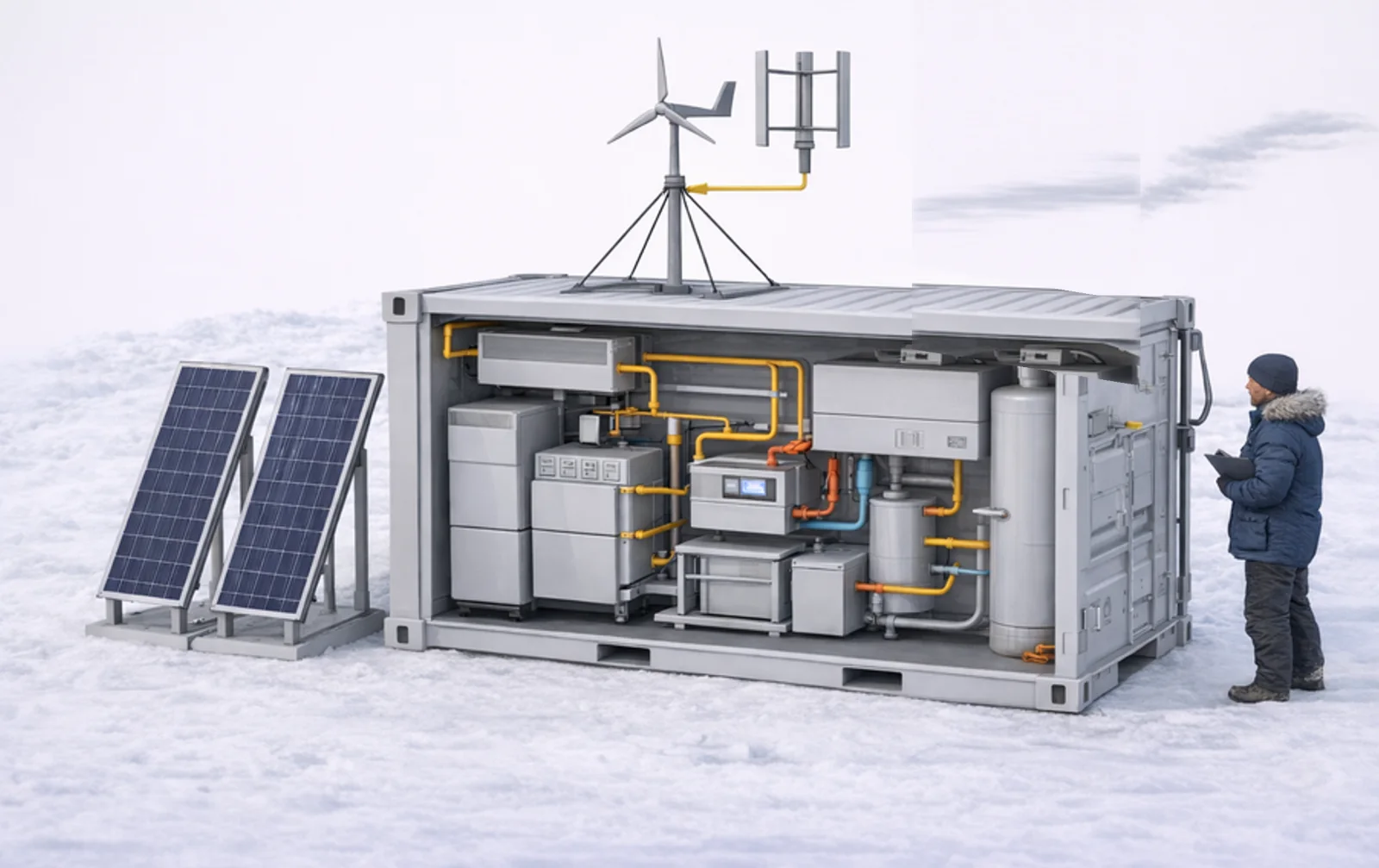
A direct methanol fuel cell is only ~30% efficient at making electricity — the other 70% is heat. We capture that heat and use it to keep cold-resistant sodium-ion batteries warm and working, exactly where lithium-ion freezes and fails.
- Renewables (solar + wind) cut fuel-cell runtime and methanol use
- Sodium-ion chemistry stays cold-resistant down to -40 °C
- Predictive, weather-adaptive software manages energy and battery health
- Extended refueling intervals with no legacy cold-start failures
The Core Innovation
Methanol Fuel Cell
100 W power + 230 W heat
Captured Waste Heat
Stored, then circulated via glycol
Sodium-Ion Battery
>90% capacity at -40 °C
The result: a battery core held at +10 °C even when it's -50 °C outside.
Four pillars of Arctic power
Methanol Fuel Cells
Clean, efficient direct methanol fuel cells provide reliable baseload power. Methanol is safer and easier to transport than diesel, with lower emissions and no particulate matter.
Clean, efficient direct methanol fuel cells provide reliable baseload power. Methanol is safer and easier to transport than diesel, with lower emissions and no particulate matter.
Codename: Polar Sentry
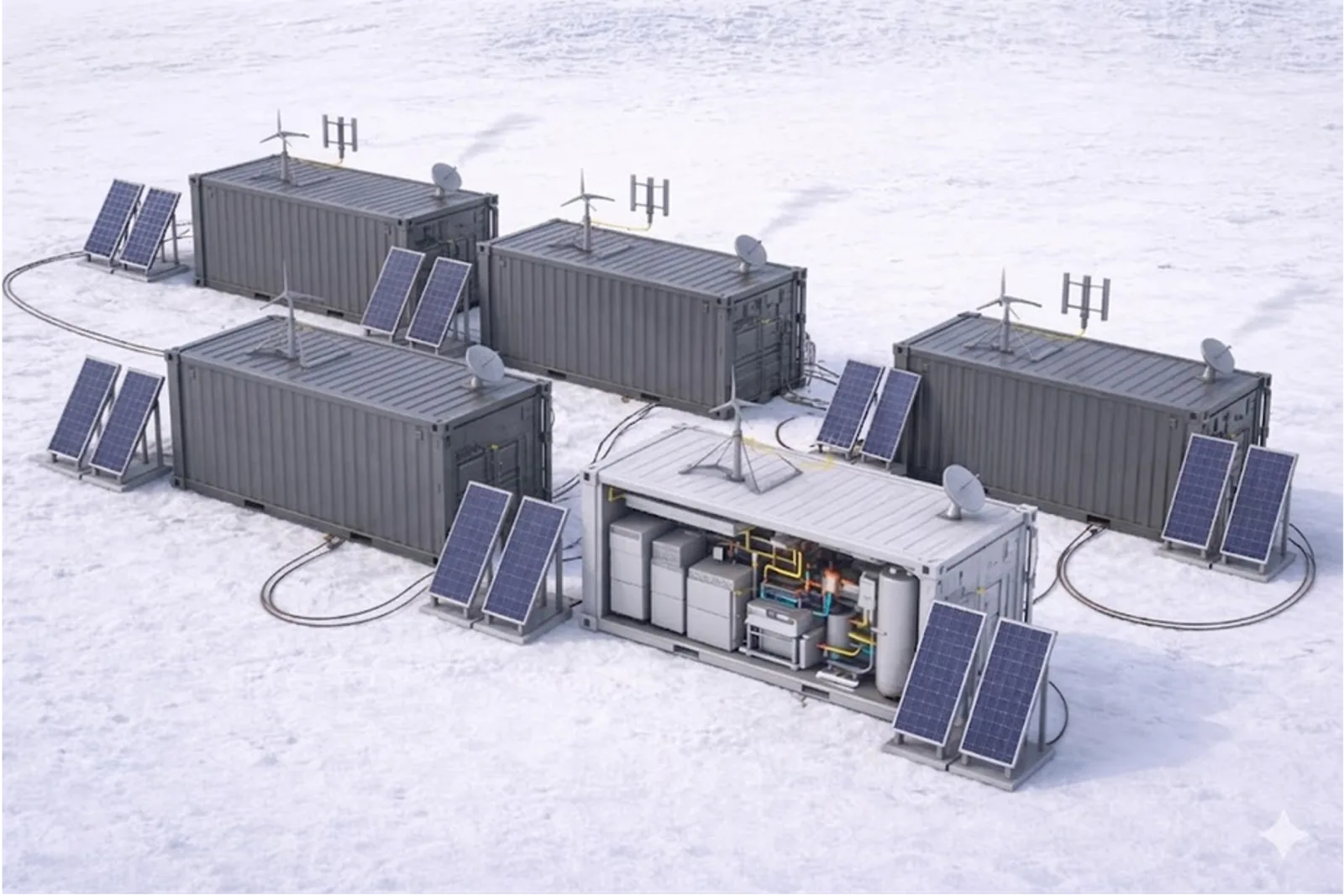
A containerized, autonomous hybrid power plant — engineered to deploy anywhere and run unattended through the Arctic winter.
Autonomy
Runs unattended for months. Temperature-driven auto start/stop and satellite telemetry remove the need for costly service trips.
Cold-Resistant Battery
Sodium-ion cells retain over 90% capacity at -40 °C — exactly where lithium-ion goes dark.
Energy-as-a-Service
Deploy with zero capital outlay. Subscribe to guaranteed uptime while we own, monitor, and maintain the hardware.
Thermal Design
Captured fuel-cell waste heat keeps the battery core at +10 °C even when it's -50 °C outside.
A multi-billion-dollar off-grid energy market
Why Now
- $35B in committed Arctic investment
- Active government funding of $300–400M / year
- Immediate deployment demand across the North
- 550+ remote sensors, still mostly diesel-powered
Total off-grid power market
Global micro-grid market
Canadian remote power market
Business Model
Energy-as-a-Service
Subscription power with no upfront capital. We deploy, monitor, and maintain each unit remotely.
$1,500–$2,500 CAD / unit / month
Direct System Sales
Outright purchase for government, military, and industrial clients who prefer to own and operate.
Pilot hardware from ~$30,000 / unit
After-Sales Services
Recurring maintenance, methanol replenishment, and ongoing system enhancements.
Recurring service revenue
Built by people who understand the North

Atupele Chakwera
Co-Founder & CEO
Atupele brings strategic vision and operational rigor, essential for selling dual-use technology to government stakeholders. His MScSM expertise addresses DND's decarbonization drivers.

Kenneth Kantande
Co-Founder & CTO
Kenneth is the engineering backbone, with a background in Electrical Engineering and is a Computer Science graduate, essential for building a "smart" hardware platform.

Samuel Chakwera
AI Advisor
Samuel Chakwera is a Data scientist and AI engineer with deep expertise and 8+ years experience working with the UN system and Provincial government.

Jack Senogles
Defence Advisor
Jack Senogles is a British Army reservist serving with the Royal Artillery. He has previously worked at the Royal United Services Institute and holds a BA in War Studies and History.

Yinan Zhang
Energy Advisor
Yinan advises on energy-system design and storage integration, bringing expertise in the engineering and techno-economics of deploying hybrid power in remote, cold-climate environments.